

Deficit vs. Affirming Language: Quick Reference Guide
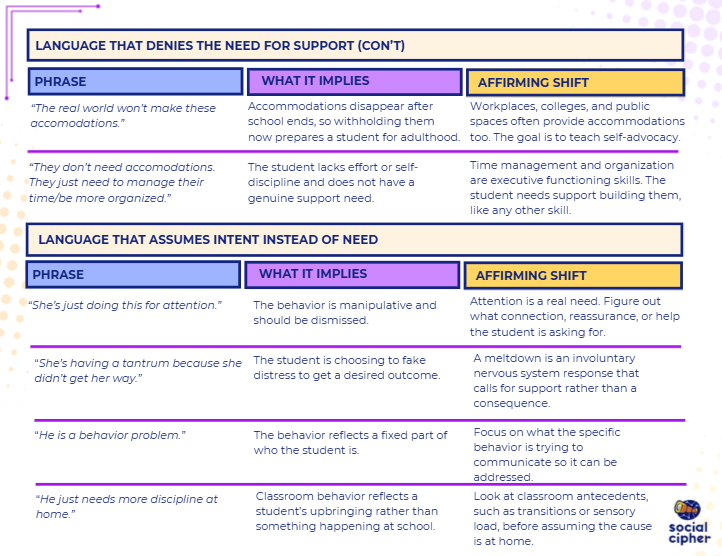
This Deficit vs. Affirming Language Quick Reference Guide organizes common deficit-based phrases that are often used when discussing neurodivergent students. The guide includes:
- Language that minimizes autism (like saying "he doesn't look autistic)
- Language that denies the need for support (like labeling someone as "high functioning")
- Language that assumes intent instead of need (like "she's just doing this for attention)
Each entry names the phrase, what it assumes about the student, and an affirming shift in language or thinking.
Download the printable Deficit vs. Affirming Language: Quick Reference Guide here or by clicking the image below.

.png)

Subscribe to our newsletter for free lesson plans, resources, and special education news.
Subscribe.png)
Sign up for our newsletter to stay up to date on the latest SEL, SpEd, and Neurodivergent news.
Talk with us
We create social and emotional learning curriculum and games for students aged 10 -15. Our mission is to represent and empower youth of all neurotypes, increase their self advocacy skills, and build their self confidence.
Contact Us:
ahoy@socialcipher.com


We create social and emotional learning games for students aged 10 -15. Our mission is to represent and empower youth of all neurotypes, increase their self advocacy skills, and build their self confidence.
Contact Us:
ahoy@socialcipher.com
We create social and emotional learning games for students aged 10 -15. Our mission is to represent and empower youth of all neurotypes, increase their self advocacy skills, and build their self confidence.
Contact Us:
ahoy@socialcipher.com
